We are like herd animals, warily sniffing, tails in the air, ready to sound the alert for danger
Posted by Lee-Anne Ragan | Filed under Diversity & culture

Photo Credit: nandadevieast via Compfight cc
“Like the herd animals we are, we sniff warily at the strange one among us.” ~ Loren Eiseley (1907 – 1977), U.S. anthropologist & writer.
I love the visuals in this quote.
Decidedly different = warily sniffing, tails in the air, ready to sound the alert for danger.
How do we overcome our urge to run? Our tendency to follow the herd instinct? How do we embrace what difference can teach us?
For how difference can expand & illuminate our world.
It takes a conscious, deliberate effort.
Take it from one who is married to someone decidedly different from myself, exploring difference can take us galaxies away from our own narrow world, from our assumptions.
~~TGIF- each Friday I rejig & re-post a blog entry from my www.life-lenses.com blog, which is about enhancing our perspective & worldview.~~

Tags: anthropology, diversity, loren eiseley
You’re fine, how am I? Learning & Development Self-care
Posted by Lee-Anne Ragan | Filed under Change management & wellness, Humor & comedy

I love this comic by Dan Piraro of Bizarro comic fame.
Makes me think of self-care & wellness. As human resource folk, trainers &/or learning & development specialists we can focus so much on our clients, our participants, our learners that we forget to lean into ourselves.
How are you? Really?
I remember once having drinks with a diverse group including a German woman who had immigrated to Canada. She recalled the first time a store clerk asked her how she was. She was utterly gobsmacked that someone would ask & didn’t know how to reply.
Whether you tell the world, your colleague, your best friend, your partner or simply keep it to yourself, how are you?
Tags: bizarro, cartoon, dan piraro
How do you experience your perspective, your life?
Posted by Lee-Anne Ragan | Filed under Diversity & culture

- Creative Commons licensed on Flickr by: Linh.Ngan
I spend a lot of time thinking about perspective. How do you see the world? How does it compare to how I see the same world?
Our perspective is framed by our cultures, including our gender, age, socio-economic background, sexual orientation, religious/spiritual beliefs, where we live (urban/rural), where we were born, the country we live in and so on. Often the frame is invisible, that is we don’t realize the frame we’re living in.
Our perspective is also framed by how we take in information. As a training & development specialist I spend a lot of time thinking about this too.
How do you take in information & which sources do you most trust?
First hand via direct, full on, lived experience.
And/or.
Second hand via:
- books
- courses
- lectures
- radio
- movies
- television
- the web
- social media
- what our friends, family, peers, colleagues share with us
How does the source affect your perspective?
~~TGIF- each Friday I rejig & re-post a blog entry from my www.life-lenses.com blog, which is about enhancing our perspective & worldview.~~
Tags: culture, perspective
6 Resources related to ‘The Power of Habit’ by Charles Duhigg
Posted by Lee-Anne Ragan | Filed under Communication, Conflict resolution, Humor & comedy

This blog post is taken from this month’s Rock.Paper.Scissors Inc. newsletter. See the entire newsletter, including free, related resources here. Don’t receive our monthly newsletter? Whatsamatter you! Sign up here.
*******
News Blast! Check out a short & sassy survey I designed about habits. It takes all of 1 minute to fill out & you’ll be able to see some of the results as soon as you finish it. As a way of my saying thanks, if you choose, you can enter yourself in a draw to win a prize. Fill in the survey here.
********
Resources Related to The Power of Habit – Why we do what we do in life & business, by Charles Duhigg
Resources on the serious side:
- See the Charles Duhigg’s website resource section – it’s packed with all sorts of things to help you break bad habits & reinforce good ones
- From a slightly different view, check out my benefits of mess newsletter and article: 5 habits of Highly Messy People- How messy desks are a sign of higher education and earning power
- See this simple flowchart / infographic that LifeHacker created that summarizes how to break a bad habit. You can even download a copy for yourself.
Resources on the lighter side (with tongue planted firmly in cheek):
- Check out this 1950’s video on how to fix bad girl habits. Seriously funny. Cue the dramatic weeping & the narrator’s condescending tone.
- Fill in my 1 minute sassy survey on bad habits. As a way of my saying thanks, you can enter yourself to win a prize. And when you’re finished the survey you’ll automatically see some of the collated results.
- Have a bad habit of loosing your patience with snobby tech customer service folk, whose sole aim, you’d swear, is to drive you nuts? Then vent some steam & have a laugh or two at this comic tailored just for you.
Tags: charles duhigg, lifehacker, power of habit, youtube
Divergent & diverse thinking produces magic in the form of rice fields
Posted by Lee-Anne Ragan | Filed under Diversity & culture

- Creative Commons licensed on Flickr by: H.Koppdelaney
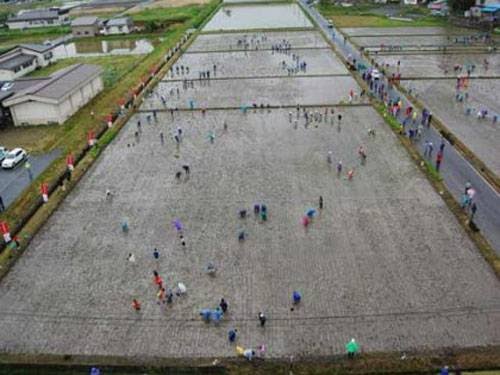
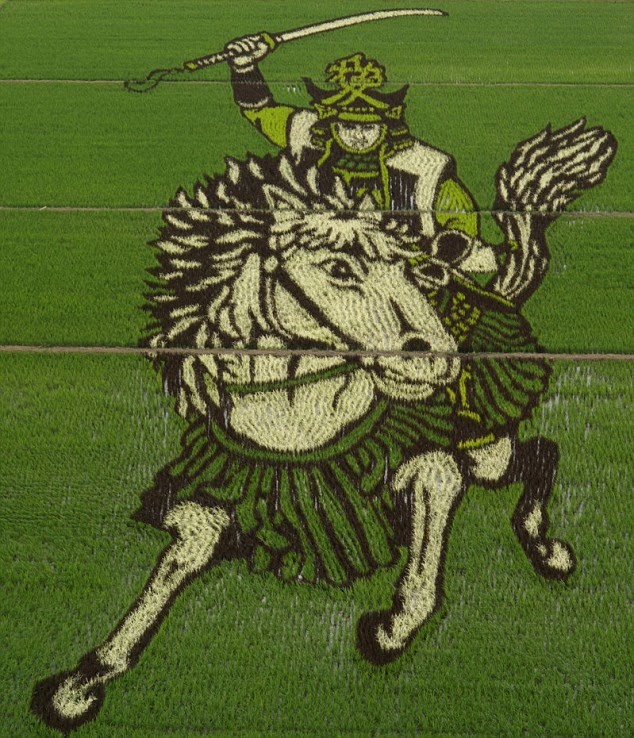
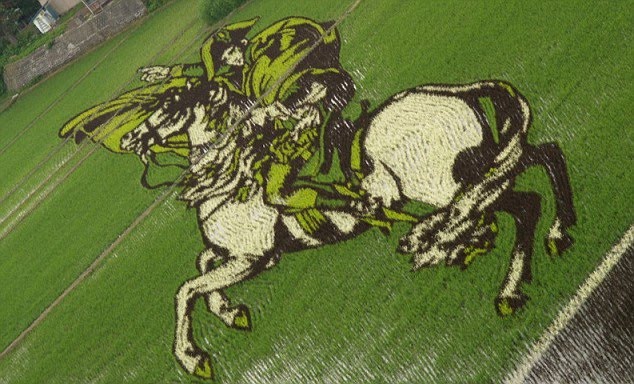
My good friend Dolly Hopkins passed the following blog post onto me about these incredible rice fields in Japan.
Beyond stunning, they are a testament to diverse & divergent ways of thinking.
The incredible attention to detail is a gift from the Carrot Life Lenses™. The patience, reflection & contemplation it takes to create such a work of art takes a Stop Life Lens™. Yet the jump in, let’s try it attitude is balanced with the Go Life Lens™, while Mountain Life Lenses™ lend the vision to create something on a grand scale.











Tags: divergent thinking, diversity
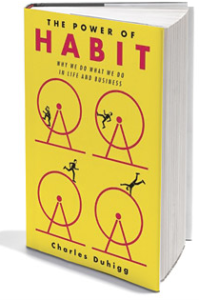
It’s not about the cookie! The Power of Habit by Charles Duhigg
Posted by Lee-Anne Ragan | Filed under Change management & wellness, Communication
This blog post is taken from this month’s Rock.Paper.Scissors Inc. newsletter. See the entire newsletter, including free, related resources here. Don’t receive our monthly newsletter? Whatsamatter you! Sign up here.
*******
News Blast! Check out a short & sassy survey I designed about habits. It takes all of 1 minute to fill out & you’ll be able to see some of the results as soon as you finish it. As a way of my saying thanks, if you choose, you can enter yourself in a draw to win a prize. Fill in the survey here.
********
It’s not about the Cookie! The Power of Habit – Why we do what we do in life & business, by Charles Duhigg
Willie knew what he was talking about. More than 40% of our actions are not decisions but habits. This has its pros & cons says Charles Duhigg, investigative reporter for the New York Times & author of The Power Of Habit.
On the yeah side (of 40% of our actions being on autopilot) it means that our brains can relax & focus on higher order thinking (how do they get the caramel in the Caramilk bar?) rather than having to frenetically pay attention to every minor thing (how do I steer my car, tie my shoe, brush my teeth & write my name).
On the nay side it means we can be held prisoner to our habits. Because habits are ‘neurological cravings’ we cling to habits against all reason. ‘Habits can be so powerful that they overwhelm our capacity to make decisions.’ Don’t feel too bad foisting that chocolate chip cookie to your lips yet again as lab rats have knowingly walked across electrified flooring to fulfill a habit loop.
Duhigg lays out the habit loop that has lassoed our brains: cue à routine à reward. Cues come in 5 categories: the immediate preceding action, location, time, emotional state & other people. Understand the cue, replace the old routine with a new one et voila, you can conquer a habit.
The habit loop is powered by a craving, namely the anticipation of a reward. If you understand the craving, you’ll understand the behaviour.
Find out more about the habit loop & download the rest of the article here.
Next week I’ll post some fun & funny resources related to habits. Can’t wait? Check out the newsletter that has all the resources here.
Tags: charles duhigg, power of habit
Adde Adesokan’s triptych photos & the stories they tell
Posted by Lee-Anne Ragan | Filed under Communication
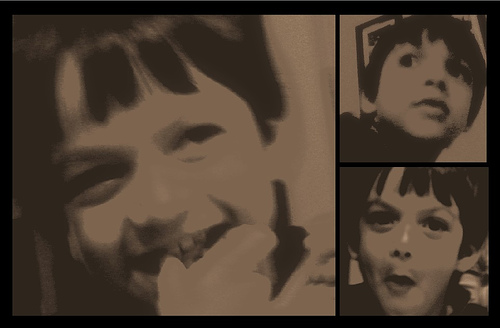
My attention was recently caught & held by the triptych photos of Adde Adesokan. He’s known for taking three part photos that capture the story of a person.
The picture above is not by him btw but rather Evoo73 (Adde’s photos aren’t licensed for me to use here but you can see them here).
Carrot Life Lenses™ will be drawn to the focus on detail.
Heart Life Lens™ will be drawn in by the emotion they evoke.
Go Life Lens™ will be captivated by the new way of seeing a person.
Journey Life Lenses™ will appreciate the story.
I like them because they’re a new way of looking at something, a fresh perspective.
What three things could the camera catch that would capture you?
~~TGIF- each Friday I rejig & re-post a blog entry from my www.life-lenses.com blog, which is about enhancing our perspective & worldview.~~
Tags: adde adesokan, life lenses
Training & development learning well February blog post round up
Posted by Lee-Anne Ragan | Filed under Communication, Conflict resolution, Humor & comedy, Training & development
If you didn’t catch all the posts last month simply peruse & click what’s below.
Here’s the Rock.Paper.Scissors’ monthly training & development round up for the month of February.
Learn well in the training & development learning well. Dive deep into the learning well or take a small sip. Shower yourself in training & development or just get your big toe wet.
Refresh & refreshing.
As you wish.
Tags: abstruse goose, bizarro, comic, conflict, dan piraro, diversity, humour, perspective, stress, training & development, walt witman, world view
What lumps & bumps are under your pillow? Their source may surprise you
Posted by Lee-Anne Ragan | Filed under Diversity & culture, Humor & comedy

This video made me laugh out loud. (Take a minute to watch it & then report back.)
What are the lumps & bumps under your pillow? aka what are the things that are flying slightly under your radar?
Here’s the view of a bumpy bed from four of the 8 Life Lens™ perspectives.
From a Carrot Life Lens™ – sees the conflict details (sometimes in minutia) but may miss the big picture. Think Princess & the Pea.
From a Mountain Life Lens™ – notices the view from on high but misses the down home, detailed view. On a bad day think grand, sweeping, generalized (sometimes stereotyped) statements, eg all beds with blue bedspreads are uncomfortable.
From a Heart Life Lens™ – feels the undercurrents, the emotions, the subjective but may miss the tangible, objective. On a bad day it’s like wearing your heart on your sleeve. eg I sense that there are 9 lives living in this bed.
From a Head Life Lens™ – thinks about what’s tangible, objective & factual. On a bad day think of focusing on facts while missing the intuitive. It is not logical that I am lying on people, therefore I am not.
~~TGIF- each Friday I rejig & re-post a blog entry from my www.life-lenses.com blog, which is about enhancing our perspective & worldview.~~
Tags: humour, life lenses, perspective
‘What makes you weird?’ asks Seth Godin
Posted by Lee-Anne Ragan | Filed under Creativity & innovation

Seth Godin wrote the following post called Destabilizing the bullying power structure. Love it. Wanted to share it with you. Come take a turn & celebrate yours & others’ weirdness & take a pass at bullying in the meantime.
Bullies aren’t welcome. For every bully, there are a dozen or a hundred workers/kids/individuals that would prefer not to be bullied. Given these overwhelming odds, how do bullies continue to get away with it?
Bullying is what happens when an individual with power exercises that power against people who don’t fit in. By threatening to expose or harm or degrade the outlier, the bully reinforces the status quo in a way that increases his power. [Physical bullying is a different phenomenon… I’m mostly writing here about emotional bullying.]
“I will punish you because you don’t fit in, and I will continue to punish you until you do.”
Bullying persists when bureaucracies and hierarchies permit it to continue. It’s easier to keep order in an environment where bullying can thrive (and vice versa), because the very things that permit a few to control the rest also permit bullies to do their work. The bully uses the organization’s desire for conformity to his own ends.
At the fabulous lab school in Manhattan, they’re making huge progress at undoing this problem. A recent assembly (organized and run by students and volunteers) was created around weirdness, fear and most of all, “owning it.” (The adults in these videos were only 10% as honest and risk-taking as the kids that stood up on stage. The kids talked about physical and mental disabilities, lifestyle choices and the things that made them sing).
When students are given permission to be their best selves, they take it, just as you and I would like to. Because, it’s true, we are all weird. When there isn’t a race to fit in the most, bullying those that don’t fit in loses much of its power.
This is incredibly brave and risky for those in charge. It involves trusting people to become something wonderful, as opposed to insisting that they fit in at all costs.
We’re all a lot weirder than we’d like the world to know. Given the chance, we can share that weirdness and run with it. It’s our best shot at a world with art, and a world without bullies. (More here, but even better, go do this in your organization…)
I’ll confess to making cookies that more often than not, never make it into the oven, as I love raw cookie dough. What makes you weird?
Tags: bullying, creativity, seth godin, weirdness