Training & development learning well March blog post round up
Posted by Lee-Anne Ragan | Filed under Change management & wellness, Communication, Training & development

Sit up, take notice & look back before looking forward to next month. If you didn’t catch all the posts this month simply usher yourself down to the well & click as you wish.
Learn well in the training & development learning well.
Dive deep into the learning well or take a small sip. Shower yourself in training & development or just get your big toe wet.
Refresh & refreshing.
As you wish.
- The Rock.Paper.Scissors newsletter is out: ‘Switch – how to change things when change is hard’ Heath brothers book review
- If you think education is expensive try ignorance
- Near miss – because you can’t look up & down a the same time
- ‘A Maasai without their culture is like a zebra without its strips’ says my Maasai friend
- Complexity of communication makes for a bigger brain
- What if God had an answering machine
- Those awkward crunchy bits of training & development
- Assumptions – an example for how to id & avoid them
- Risk Management: warning, this area protected by guard dog 3 days/week – you guess which days.
- Laugh, learn & lead via God fearing, saved Christian driver

Tags: assumptions, communication, complexity, culture, education, heath brothers, ignorance, maasai, risk management, shelby edwards, switch
Changing perspective – from war to peace
Posted by Lee-Anne Ragan | Filed under Change management & wellness

This post is especially relevant as I’m super excited to announce I’m working with Emmanuel Jal, former child soldier, international hip hop artist & activist, on several upcoming peace conferences & concerts.
Changing perspective. From war to peace.
From guns to doves.
From misunderstanding to understanding.
From positions to possibilities.
From one perspective to another.
Perspective both shadows and illuminates. What’s your perspective done for you lately?
Sokak Savaşa Karşı | Streets Against The War from sokak savasakarsi on Vimeo.
~~TGIF- each Friday I rejig & re-post a blog entry from my www.life-lenses.com blog, which is about enhancing our perspective & worldview.~~
Tags: emmanuel jal, life lenses, peace, perspective, sokak svasa kars, war
‘Switch – how to change things when change is hard’ Heath brothers book review
Posted by Lee-Anne Ragan | Filed under Change management & wellness

Creative Commons licensed on Flickr by: donkeyhotey
I happily dug into reviewing the Heath brothers book ‘Switch – how to change things when change is hard’ to bring you this month’s Rock.Paper.Scissors’ newsletter. It’s a keeper. Check out the article below for the review & be introduced to the elephant that is living within you (& which plays a huge role in all your change efforts).
Read the entire newsletter here, download a hard copy of the article &/or read on below for the reprinted article. Not already receiving our free monthly newsletters? Whatsamatter you? Sign up here.
|
Elephant
|
Rider
|
|
|
Needs
|
Motivation
|
Direction
|
|
Strength
|
|
|
|
Weakness
|
|
|
‘Change often fails because the rider can’t keep the elephant on the road long enough to reach the destination.’ ‘Changing behaviours requires careful supervision by the rider,’ & that supervision (aka self-control) is tiring. So much so that ‘what looks like laziness is often exhaustion’ & ‘what looks like resistance is often a lack of clarity.’
When we focus on the rider we miss the elephant. We give direction without motivation and let’s face it, the elephant is a whole lot bigger than the rider. While we like to think we can ignore the elephant in the room, it’s not going nowhere, no how.
We need to reach the elephant through motivation and the rider through direction (and the more crystal clear direction the better). Eating healthier, for example, is anything but a clear direction. One of the many stories from the book demonstrate that changing behaviour resulted from incredibly specific direction, namely switching from whole milk to skim or 1% milk. When you know that milk is the single largest source of saturated fat in American diet, this is a great, practical example of a successful change effort. Eating healthy wasn’t an amorphous, cloudy concept, it came down to reaching for 1% milk at the grocery store not whole milk.
So what’s an elephant rider to do? The Heath brothers break it down for us.
1. Direct the rider
- Find the bright spots (what’s working & how can we do more of it) – a successful program to fight child malnutrition in Vietnam did just that & found that moms who fed their kids the exact same amount of food each day but spread it over 4 times/day instead of 2 had healthier kids. The rider inherently has a problem focus, guide them to a solution focus by finding the bright spot.
- Script the critical moves – because the most familiar path is always the status quo … clarity dissolves resistance. The more decisions we’re offered the more exhausted the rider gets, for example research found for every 10 retirement options that were offered employee participation rate dropped by 2%. Choice doesn’t liberate it debilitates.
- Point to the destination – create what the Heath brothers call destination postcards, which point to an attractive destination, a vivid picture from the near-term future that shows what could be possible. Pointing to the destination stops the rider from getting lost in analysis & gets the rider to apply their strengths of how to get there while showing the elephant why journey is worthwhile. And, when you’re at the beginning ‘don’t obsess about the middle, because the middle is going to look different once you get there. Just look for a strong beginning & a strong ending & get moving.’
2. Motivate the elephant
Knowledge does not change behaviors, ‘we have all encountered crazy shrinks and obese doctors & divorced marriage counselors,’ what’s critical is motivating the elephant.
- Find the feeling – of the 24 most common emotion words in the English language, only 6 are positive! ‘In highly successful change efforts, people find ways to help others see the problem or solutions in ways that influence emotions, not just thought – in other words when change works, its’ because leaders are speaking to the elephant as well as to the rider.’ ‘When it comes to changing the behaviour of other people our first instinct is to teach them something. We speak to the rider when we should be speaking to the elephant.’ Emotion motivates the elephant.
- Shrink the change – people find it more motivating to be partly finished a longer journey than to be at the starting age of a shorter one. Motivate by making people feel as thought they’re closer to finish than they think. Making the house cleaner as opposed to clean is an example of shrinking the change. Instead of looking for milestones look for what the Heath brothers’ dad used to call inch pebbles.
- Grow your people – the Heath brothers say creating the expectation of failure is critical because elephants really, really hate to fail. It brings on the flight instinct. Encourage a growth mindset, instead of a fixed mindset. The business world rejects growth stage- there’s no learning stage, there’s plan & execute. A growth mindset is the difference between seeing falling down as failing versus learning. Early failure is a kind of necessary investment. In fact a high school principal in Georgia instituted grades A, B, C & NY where the latter stands for not yet. In other words you can’t stop until you clear the bar.
3. Shape the path
- Tweak the environment – ‘what looks like a person problem is often a situation problem & simple tweaks of the path can lead to dramatic changes in behavior.’ We are guilty of the ‘fundamental attribution error’ which is our to attribute people’s behaviour to the way they are rather than the situation they are in. Make the journey easier & shape the path, which means ‘making the right behaviour a little bit easier & the wrong behaviours a little bit harder.’ ‘When it comes to changing behaviour environmental tweaks beat self-control every time.’ Removing the answering machines at the company Rackspace led to the straightjacket awards (being ‘fanatically insane about customer service’) & landed the company on Fortune’s Best Places to Work list in 2008. The old behaviour (ignoring customer calls) was made harder, while the new behaviour (serving customers) was made easier.
- Build habits – the rider’s self-control is exhaustible so it’s a huge plus if some positive things can happen ‘free’ on autopilot. You can do this by creating ‘action triggers,’ a mental plan that preloads a decision. With hard to achieve goals, action triggers tripled the chance of success (from 22% goal completion to 62%). A school that had been getting the lowest scores in the entire state of Tennessee created a habit by having staff be personal valets when the kids arrived each morning. The kids tended to come to school from tumultuous, chaotic environments, so having them quietly escorted into the building created a calming habit, set the stage for learning & created a tremendous change.
- Rally the herd – we’re not only susceptible to peer pressure but merely the whiff of peer perception. In a study, where 3 people were in a room that filled with smoke, only 38% reported the smoke! Each individual was influenced by the others who did nothing. How to translate this into positive change? ‘Don’t publicize people not handing in timesheets on time rather publicize those that do.’ ‘When change comes into conflict with culture, a new rule is no match for culture.’ Not only find those bright spots that direct the rider but make them public & ‘contagious’ because ‘culture isn’t just one aspect of the game- it is the game.’
So how do you keep a successful change effort going? Take a page from animal trainers say the Heath brothers. Animal trainers reward approximation ‘which is a problem for us as we’re terrible reinforcers, we complain more than praise but ‘Shamu didn’t learn to jump through a hoop because her trainer was bitching at her.’ Change isn’t an event it’s a process.
Tags: book review, heath brothers, switch
If you think education is expensive try ignorance
Posted by Lee-Anne Ragan | Filed under Training & development

I snapped this picture of a bumper sticker.
Love it.
It speaks volumes.
Education costs.
It costs time.
It costs money.
More importantly it costs your self-image because education means making oneself vulnerable, opening up to new information, new ways of looking at old pictures.
Education means taking risks.
Education means knowing you don’t know it all.
Education means allowing question marks to dance.
Education means inviting exclamation marks – to ‘get it’ in new ways, to see the light.
Tags: self image, training & development
Near miss – because you can’t look up & down a the same time
Posted by Lee-Anne Ragan | Filed under Communication

- Carrot Life Lenses™ look down. They see the details.
- Mountain Life Lenses™ look up. They see patterns and trends.
No matter where you’re looking, you’ll see some things and you’ll miss some things.
You can’t look everywhere with ease.
The key is to know where you naturally look and where you don’t look … and therefore where you might be loosing perspective. And look what happens when you loose perspective as these fishermen and float plane find out!
~~TGIF- each Friday I rejig & re-post a blog entry from my www.life-lenses.com blog, which is about enhancing our perspective & worldview.~~
Tags: carrot lens, mountain lens, perspective
‘A Maasai without their culture is like a zebra without its strips’ says my Maasai friend
Posted by Lee-Anne Ragan | Filed under Diversity & culture

‘A Maasai without their culture is like a zebra without its stripes,’ said Leteipa, our Maasai guide in the Mara for the last couple of days.
The Mara (as the Maasai Mara) is known to locals here in Kenya is some 16,000 square kilometers. Loads of space for learning, musing & having a blast. I just came back from a couple of days there. Here’s what I learned:
– I learned that leaping straight into the air, as the Maasai do for their dance, is harder than it looks. That’s me above with Leteipa practicing. (And us laughing at my attempts below.)

– I learned that Maa is the language of the Maasai & that Sai means people, so Maasai is literally the language of the people
– I learned that you can recognize a Maasai by their missing two front teeth which they deliberately pull out so when they get lock jaw medicine can be administered
– I learned that Leteipa, whose father has 8 wives & 28 children, calls all his mothers ‘mom’
– I learned that the distance between traditional culture & ‘modern’ cultures can be bridged elegantly. For example Leteipa values formal education greatly & continues to enjoy his morning breakfast of cow’s blood mixed with milk.
– I learned that my intuition can be bang on. When my camera batteries died & I couldn’t recharge them, making taking pictures impossible, I said, that for sure we’d see a leopard on that afternoon’s safari and …. we did … a baby one. After 20 some safaris I finally saw a leopard.
– I learned that experiencing that baby leopard was sweetest without the camera lens in front of my face.
– I learned that babies, even leopard babies, love to explore, as this one meandered down the road in right front of our car. And I learned that mama’s aren’t always visible but are always on the scene – as we searched in vain for the mama we knew was near but couldn’t see.
– I learned that taking a deep breath of appreciation & gratitude, as we watched lion cubs frolic with their mama a scant few metres away from our car, is good for the soul
– I learned that the smallest distance between several cultures is measured in music & dance, as we spent a fabulous evening dancing with Leteipa & hosts – both to traditional African songs & North American songs.
With the sound of the rushing river at our feet, the grumblings of hippos as they settled in to feed for the night, the soft glow of candle light reflecting our ear to ear grins, our bellies full from a good meal, all was well in the world.
Finally I learned that the bridge between Canadian culture & Maasai culture is at once long & short, so any mistakes or misinterpretations of the above rest entirely on my shoulders
Complexity of communication makes for a bigger brain
Posted by Lee-Anne Ragan | Filed under Uncategorized
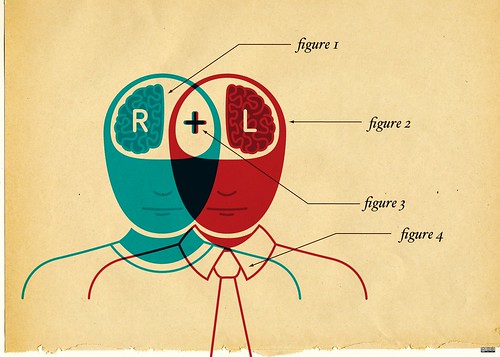
Thomas Sander, Executive Director of the Saguaro Seminar at Harvard writes an interesting blog post about how socializing expands brain size.
Turns out Oxford scholars say the “more social creatures, among them humans, had the most rapidly expanding brain sizes to cope with the complexity of collaboration, social norms and coordination.”
In other words species who socialize grow bigger brains over time. Cats have relatively smaller brains than dogs it’s proposed, because they are less social than dogs.
Navigating the social norms and nuances is tough enough amongst your tribe, throw in ‘other’ – those who have a different perspective, a different view, an opposing worldview – and it makes for fodder for the brain.
Who knew navigating perspective could grow your brain. Seek out other.
Seek out similarities that are significant and differences that make a difference. Seek out other Life Lenses™. Your ancestors to come will thank you for their bigger brains.
~~TGIF- each Friday I rejig & re-post a blog entry from my www.life-lenses.com blog, which is about enhancing our perspective & worldview.~~
Tags: brain development, brain-based, harvard, saguaro seminar, thomas sander
What if God had an answering machine
Posted by Lee-Anne Ragan | Filed under Communication, Humor & comedy

Creative Commons licensed on Flickr by: dougww
My friend Dolly Hopkins sent me an email with examples of what God might record if he/she had an answering machine.
The original post is from a blog called Le Padre ver Livre. It’s a great example of a different kind of perspective & if you read this blog regularly you know I’m a fan of pointing out different perspectives.
Most of us have now learned to live with voice mail as a necessary part of our daily lives. But have you ever wondered what it would be like if God decided to install voice mail? Imagine praying and hearing the following:
~Thank you for calling Heaven. For English, Press 1. For Spanish, press 2. For all other languages, press 0.
~Please select one of the following options: Press 1 for Requests. Press 2 for Thanksgiving. Press 3 for Complaints. Press 4 for all other inquiries.
~I am sorry. All of our angels and saints are busy helping other sinners right now. However, your prayer is important to us, and we will answer it in the order it was received. Please stay on the line.
~If you would like to speak to: God, press 1. Jesus, press 2. Holy Spirit, press 3. If you would like to hear King David sing a Psalm while you are holding, press 4. To find a loved one that has been assigned to Heaven, press 5, then enter his or her social security number, followed by the pound sign. If you receive a negative response, please hang up and try area code 666. For reservations at Heaven, please enter J-O-H-N, followed by the numbers 3-1-6.
For answers to nagging questions about dinosaurs, the age of the earth, life on other planets, and where Noah’s Ark is, please wait until you arrive.
Our computers show that you have already prayed today. Please hang-up and try again tomorrow.
The office is now closed for the weekend to observe a religious holiday. Please pray again on Monday after 9:30 am. If you are calling after hours and need emergency assistance, please contact your local pastor.
Thank you, and have a heavenly day!!
Tags: god, le padre ver livre, perspective
Those awkward crunchy bits of training & development
Posted by Lee-Anne Ragan | Filed under Training & development

Creative Commons licensed on Flickr by: Kim Scarborough
My good friend & colleague Melanda Schmid & I just finished doing a 6 day training in Cairo, Egypt. The participants were from 20+ countries & it fell to Melanda to make sure visas were got, tickets were bought & everyone ended up at the right place at the right time.
She did a masterful job (truly, it was a wonder to behold watching her orchestrate the logistics) AND it meant she couldn’t put as much time into the training design as she would have liked to.
When we were sitting down to meet about the training design she referred to ‘those awkward crunchy bits’ a.k.a. those times when things go sideways in a training, when things don’t turn out like you’d hoped, when you forget a crucial supply, when you run into glitches & gaffes & are wondering if you can do anything right, including if you’ve got your underwear on right side out.
Scott Berkun talks about this in his book ‘Confessions of a Public Speaker’ – particularly in the chapter called ‘It couldn’t possibly get worse than this’ (which has one speaker astonished when a SWAT team arrives to drag away one of his participants!).
As trainers we’re a brave lot. Let’s face it, getting up in front of people & speaking (let alone teaching them something) causes our prehistoric brain to scream ‘run!’
However.
Those ‘crunchy awkward bits’ are almost always less crunchy & awkward than we think they are. One of the participants in the Cairo training, a delightful, multi-talented, vivacious, skilled woman was in tears, berating herself for the self-described bad job she did presenting. Our opinion? She may not have hit it out of the park but she did well.
How you respond when you’re not 100% on top of your game can either make your audience squirm in embarrassment with you or root along with empathy & understanding.
It depends on how you react to your own ‘awkward crunchy bits.’
Responding with humour & humility is a sure sign of a confident trainer (& one who will keep the participants engaged & interested).
Next time you feel you’re spinning in one place, directionless, take a look at how beautiful & real that can look to others.
(I filmed this on a Nile River cruise one evening after a training day.)
Tags: awkward crunchy bits, melanda schmid, scott berkun
Assumptions – an example for how to id & avoid them
Posted by Lee-Anne Ragan | Filed under Communication

Assumptions. We all make them. All the time.
What’s worse is we’re usually unaware that we’re making them. Assumptions that is.
They’re devilishly difficult to identify. They play with our heads and how we see what’s in front of our face and fortune.
A great example of id’ing & avoiding assumptions is Melodie Biringer of Crave fame. Melodie has a knack for sussing out assumptions & busting them up (in high heels no less). When she launched her book Craving Success (a startup junkie’s path from passion to profits) in Vancouver she told a great story of id’ing & avoiding an assumption.
One of her many businesses was once selling gourmet food. She made a bucket of bucks at Christmas and could have succumbed to signing a lease or three at a mall (in order to sell said food year round). Instead she turned that assumption on its head and used the then-new concept of pop-up stores. In for Christmas. Out for the New Year. Temporary diggs. Done. Diggit.
What assumptions are you making when it comes to:
- conflict
- what has to get done
- communication
- that new colleague of yours
- your boss
- you!
Check out the Life Lenses™ assessment. It’s a pro for pulling the plug on assumptions.
~~TGIF- each Friday I rejig & re-post a blog entry from my www.life-lenses.com blog, which is about enhancing our perspective & worldview.~~
Tags: assumptions, melodie biringer