Are you the lizard or the termite today?
Posted by Lee-Anne Ragan | Filed under Change management & wellness

Creative Commons licensed on Flickr by: peasap
I currently live in Africa. As a result I share my home with some critters that would be most unexpected back home in Vancouver. Like lizards.
Often I’ll come into a room & startle a small lizard into fleeing the scene. I find them cute & I frequently say hello.
There are times, I’m coming to know, that termites are also in the air. For a brief period of time they fly about, their large wings beating frantically, as they bash about aimlessly. With their lacy looking wings, they’re harmless & quite pretty.
The other night I came into the kitchen to find several termites trying to dart about (they seem to extend such an effort to not only get, but to stay aloft).
That is, until a lizard nimbly leapt at one & gobbled it up. I watched it disappear with big bits of the termite still sticking out of its mouth.
Will you be the lizard or the termite today?
Will you dart about aimlessly, bashing around, looking busy but having no focus, until you become part of someone else’s agenda?
Or will you take charge of your own agenda, seize opportunities, take big mouthfuls of life, experience it richly & move on?
Some days I’m the termite, some days I’m the lizard. You?

Tags: africa
Training & development learning well June blog post round up
Posted by Lee-Anne Ragan | Filed under Training & development

If you didn’t catch all the posts this month simply peruse & click what’s below.
Here’s the Rock.Paper.Scissors’ monthly training & development round up for the month of June.
Learn well in the training & development learning well.
Dive deep into the learning well or take a small sip. Shower yourself in training & development or just get your big toe wet.
Refresh & refreshing.
As you wish.
- The Rock.Paper.Scissors newsletter is out:
- The Really Good Learning Bookshop- resources for experiential, brain-based trainers
- This light never turns green (& other complaints from Go Life Lenses™)
- Rock paper scissors in an infographic
- But what are you actually grateful for? It’s a question that could change your life.
- Pickled perspective on powers of persuasion & assimilation
- A social media training treasure hunt
- What’s behind door #1? Self-awareness & perspective
- How do you say ‘be kind to animals?’ It’s a matter of perspective.
Tags: assimilation, astore, blog, blogs, brain based learning, coca cola, communication, compfight, Conflict resolution, creative commons, delicious, doodle, dyana valentine, etsy, experiential education, facebook, flickr, go lens, google, googlel doc, graphics, gratitude, hootsuite, huffington post, immigration, infographics, jeff bulla, linkedin, marketing grader, media bistro, netvibes, newsletter, pedagogy, perspective, regretsy, search grader, self-assessment, self-awareness, social media, stop lens, twitter, youtube
Back to the future – what would your former self have to say about your current self
Posted by Lee-Anne Ragan | Filed under Communication, Diversity & culture

Irina Werning, a brilliant Buenos Aires photographer was inspired to ‘re-enact’ old photos of people. She asked friends and family to turn back time & have themselves photographed as they were in old pictures. The ongoing project is called “Back to the Future.”
It got me thinking …. what would your former self have to say about your current self? What would the young girl above have to say to the woman she grew into?
What would your ten year old self say to your current self? What words of advice would your 18 year old self have?

Like the impish grin below, what’s remained consistent with you?

How has your perspective changed over time? For me, I notice as my teenage son grows deeper into teenagehood, it gives me more perspective on what it may have been like for my mom to parent me. What seemed unjust at the time perhaps has another side.

Our perspective has a deep and unyielding frame around it. The frame is affected by our age, gender, ethnicity, nationality, beliefs etc. The frame affects what we see, what we ignore, what we deem important and what we dismiss. The frame affects our worldview.
Step out of frame and a whole new perspective opens up.
~~TGIF- each Friday I rejig & re-post a blog entry from my www.life-lenses.com blog, which is about enhancing our perspective & worldview.~~
Tags: irina werning, worldview
The difference between awareness & vision
Posted by Lee-Anne Ragan | Filed under Business & organizational development
I’ve been working on revising some training & development curriculum for UN-Habitat, specifically for engaging youth & local leaders. I came across the following work by David Tees & Fred Fisher.
It lays out the difference between awareness & vision.
Where are you on the spectrum? Where does your perspective go to naturally & easily?
In which realm is it easier for you to work – awareness or vision?

Tags: awareness, david tees, fred fisher, vision
The Really Good Learning Bookshop- resources for experiential, brain-based trainers
Posted by Lee-Anne Ragan | Filed under Training & development

I came across the Really Good Learning Bookshop, who are based in London, a while back & have been meaning to write about them since.
Here’s how they describe themselves:
“We believe strongly in training which is brain-friendly, student-centred and experiential. Only by involving students actively in the learning process can the neural pathways of the brain change and transfer of learning take place.”
Can you hear my pom poms rustling as I yell ahem & amen to brain-based, experiential learning & training?
See them on Twitter here: “Online training and learning bookshop, specialising in brain-friendly resources. We also love to train and design courses (especially for subject experts).”
When I was surfing through their blog posts, I was delighted to find they’d been coming to Africa, specifically Tanzania, to do some training. Here’s an example of putting yourself as a trainer, in your learner’s shoes using a knot-tying exercise.
Check them out. There’s good stuff there.
Tags: brain based learning, experiential education
This light never turns green (& other complaints from Go Life Lenses™)
Posted by Lee-Anne Ragan | Filed under Communication

This photo made me laugh out loud – it’s a perpetual complaint self-assessed Go Life Lenses™ have of Stop Life Lenses™.
Do you know someone who always wants to think things over for a loooooong time before taking action? Wants to read just 5 more reports before making a decision? Needs to ruminate, debate, theorize and endlessly reflect?
Likely they are a Stop Life Lens™ – oriented towards reflection rather than action.
Likely also means that you’re a Go Life Lens™ – oriented towards action rather than reflection. (You have your sore points too, we’ll get to that in another post.)
If you’re a Go Life Lens™ working or living with a Stop Life Lens™ here are some tips for smoothing out rough waters:
- don’t ask a Stop Life Lens™ to make a decision quickly because their default decision will be ‘No!’
- if you do have a legitimate reason for asking a Stop Life Lens™ to take action in a hurry, acknowledge that you understand they’d ideally like more time
- ask a Stop Life Lens™ to identify three key pieces of information they need in order to be able to move forward (e.g. put a limit on things)
- acknowledge a Stop Life Lens’™ ability to prevent running headlong over a cliff – their caution can save your impetuous hide!
~~TGIF- each Friday I rejig & re-post a blog entry from my www.life-lenses.com blog, which is about enhancing our perspective & worldview.~~
Tags: communication, go lens, self-assessment, stop lens
Rock paper scissors in an infographic
Posted by Lee-Anne Ragan | Filed under Communication, Creativity & innovation, Training & development

Not that, ahem, I’m biased, but you gotta love this rock paper scissors infographic (Nathan the nerd even got the order of the words right).
It’s a great example of the power of visual learning. It’s fun. It’s creative.
Three things that our brains love, making it easier to be creative, to communicate & to teach.
Next time you’re trying to explain something, see if you can do it using a picture (Compfight is my go to tool for finding Creative Commons licensed photos) or an infographic (check out some of my favourite infographics here).
Tags: compfight, creative commons, graphics, infographics
But what are you actually grateful for? It’s a question that could change your life.
Posted by Lee-Anne Ragan | Filed under Change management & wellness
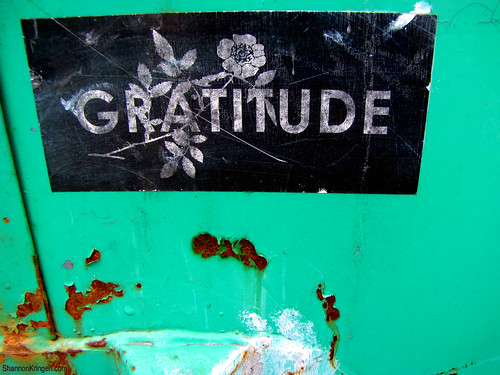
Backed up by rigorous research, the article below (excerpts from a Huffington post article), highlights the influence our state of mind has on our wellbeing. While you’re reading it, I encourage you to think about how this affects you as a person, a colleague, a boss, a trainer, a friend, a parent, a member of your community etc.
If you believe, for example, that to get any work done, you have to put your nose to the grindstone (really? that image evokes blood!), think again. Positive vibes aren’t just for hippies.
While the article specifically focuses on gratitude, it’s not a stretch to think that being fulfilled & happy, leads to better, well, almost everything. Better employees. Better trainers. Better bosses. Better organizations. Better people.
But what are you actually grateful for? It’s a question that could change your life.
Recent studies have concluded that the expression of gratitude can have profound and positive effects on our health, our moods and even the survival of our marriages.
As Drs. Blaire and Rita Justice reported for the University of Texas Health Science Center, “a growing body of research shows that gratitude is truly amazing in its physical and psychosocial benefits.”
In one study on gratitude, conducted by Robert A. Emmons, Ph.D., at the University of California at Davis and his colleague Mike McCullough at the University of Miami, randomly assigned participants were given one of three tasks. Ten weeks later, participants in the gratitude group felt better about their lives as a whole and were a full 25 percent happier than the hassled group. They reported fewer health complaints, and exercised an average of 1.5 hours more.
In a later study by Emmons, people were asked to write every day about things for which they were grateful. Not surprisingly, this daily practice led to greater increases in gratitude than did the weekly journaling in the first study. But the results showed another benefit: Participants in the gratitude group also reported offering others more emotional support or help with a personal problem, indicating that the gratitude exercise increased their goodwill towards others, or more tehnically, their “pro-social” motivation.
There’s an old saying that if you’ve forgotten the language of gratitude, you’ll never be on speaking terms with happiness. It turns out this isn’t just a fluffy idea. Several studies have shown depression to be inversely correlated to gratitude. It seems that the more grateful a person is, the less depressed they are.
Apparently, positive vibes aren’t just for hippies. If you want in on the fun, here are some simple things you can do to build positive momentum toward a more happy and fulfilling life:
Sure this world gives us plenty of reasons to despair. But when we get off the fast track to morbidity, and cultivate instead an attitude of gratitude, things don’t just look better — they actually get better. Thankfulness feels good, it’s good for you and it’s a blessing for the people around you, too. It’s such a win-win-win that I’d say we have cause for gratitude.
Ocean Robbins is an author, speaker, facilitator, movement builder and father. To learn more about his work or to get a free copy of his mini-book “The Power of Partnership,” visit www.oceanrobbins.com.
Tags: gratitude, huffington post
Pickled perspective on powers of persuasion & assimilation
Posted by Lee-Anne Ragan | Filed under Communication, Diversity & culture

Chances are you have a jar of pickles buried at the back of your fridge. Did you know pickles were once at the heart of immigrant identities and cultural tension? If we can be so far off the mark with pickles, imagine how else our perspectives might be narrow and constricting.
A century ago in New York City, Jane Ziegelman writes in the New York Times, “politicians, public health experts and social reformers were alarmed by what they saw as immigrants’ penchant for highly seasoned cooking.” Consuming these foods led to “nervous, unstable people.”
“No immigrant food was more reviled than the garlicky, vinegary pickle. Pungent beyond all civilized standards, toxic to both the stomach and the psyche, the pickle was seen as morally suspect.”
Charity workers, nurses and well-intentioned New Yorkers were appalled by what mostly Jewish and Eastern European immigrants were eating.
Pickles were even viewed as a stimulant and as “a compulsion for those too young to drink alcohol.”
As Jane concludes, “Our powers of assimilation are greater than we know. We can speak Spanish [or French], eat sushi and still be American [or Canadian]. The proof is in the pickle.”
What’s your perspective, pickled or otherwise?
~~TGIF- each Friday I rejig & re-post a blog entry from my www.life-lenses.com blog, which is about enhancing our perspective & worldview.~~
Tags: assimilation, immigration
A social media training treasure hunt
Posted by Lee-Anne Ragan | Filed under Business & organizational development, Communication

Today is the first day of a new course I’m teaching called ‘Transforming Workplace Learning through Social Media’ and I thought I’d let you in on some of the treasures to be found when you incorporate Social Media into your training and development work.
(And yes, Social Media deserves to be capitalized ….. pun intended.)
New to Social Media? A little nervous about it? Haven’t a hot clue how to use it in training and development?
Have no fear, that’s where this treasure hunt comes in. Simply answer the questions below – and put your answers on this Google Doc I created. To do that, simply click on the link, add your name to the next column and type in your answers to the questions below. Here we go.
There are 10 questions that highlight 10 different Social Media tools. Have fun matey – as thar’s gold in the waves that Social Media is creating.
- LinkedIn – is a great way to share upcoming training events. For example, click on my LinkedIn profile page and, looking under my events, find out what my next workshop is. Write your answer on the Google doc.
- Facebook – isn’t just something that your teenage kid does to annoy you, it’s the source of all sorts of great things. Take a look at my Facebook page and write a comment below one of my posts. Then copy your comment to the Google doc page.
- Twitter – look at my Twitter profile and look at my lists. Lists are groups of people I follow, categorized into, well, lists. Find my Social Media Twitter list and click on one person from the list. Put their name in the Google doc and 1 interesting thing about them. Having trouble finding the list? You can access it directly here. OR if you are comfortable with Twitter, send me a tweet asking me a question (write your question in the Google doc as well). My Twitter handle (or name) is @LeeAnneRagan
- Blogs- are great for sharing vast amounts of resources and training material. Take a look at my Rock.Paper.Scissors Inc. blog, read one post (any post) and write down three words that the post makes you think of on the Google doc. (This is going to be fun – I’ll surprise you later with what I’m going to do with those three words.)
- Delicious – is a marvelous social bookmarking site. Once you have an account (which is free) you can ‘tag’ or put reminder words on websites and other resources that you come across on the web. It’s like having a full-time knowledge management person at your beck and call. Check out my Delicious account. Click on one link that I’ve bookmarked (any link) and write down which one you clicked on in the Google doc.
- Flickr – is a photo sharing site. Currently there are some 2 billion photos stored there. Check out my Flickr ‘stream’ (just a fancy word for my Flickr account) and look at some of the photos. Describe one of the photos in the Google doc (or if you know how, copy the photo into the Google doc).
- AStore – (or Amazon store) is a great way to list the books you recommend as a trainer. You can list books by categories to make it really easy for your training participants. See my AStore as an example. Look at the ‘Training Trainers: how to teach’ section. Browse the books. Which one is your favourite? List it on the Google doc.
- Newsletters – continue to be a good way of reaching groups that haven’t yet caught onto Social Media as much. My monthly newsletter are all listed here. Click on one of them and record your thoughts about it on the Google doc. (Make sure you include the name of the newsletter you’re commenting on.)
- Doodle – is a fun online tool that helps find out when is the best time for people to meet. I’ve created a mock Doodle which you can access here. Pretend that we are trying to find the best time to leave on a training & development study tour in Paris. Simply click on the link above, enter your mock (remember this is mock!) results, then also enter your #1 date on the Google do. Merci!
- Video is a great way to use Social Media – either ones other people have filmed or ones you yourself have recorded. Below is an example video I shot to describe the Social Media course. Take a look and see if you can guess where it was filmed (any and all creative responses are welcome). Write your response in the Google doc.
Tags: astore, blog, delicious, doodle, facebook, flickr, google, googlel doc, linkedin, newsletter, social media, twitter, youtube